
our origins
In the Beginning
Hey, who’s hammering over there?
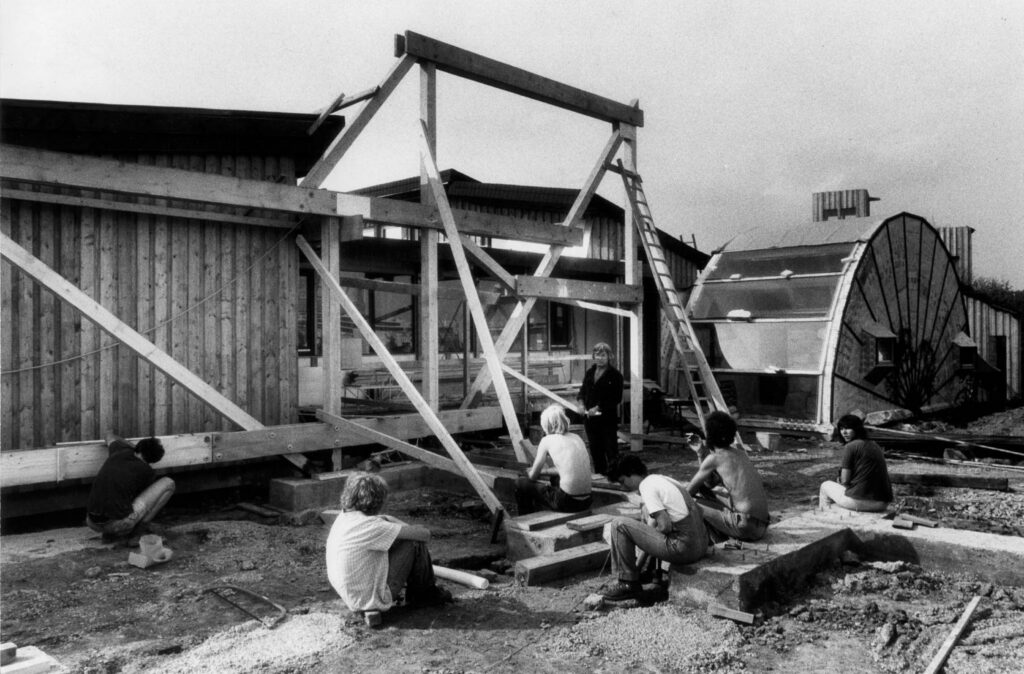
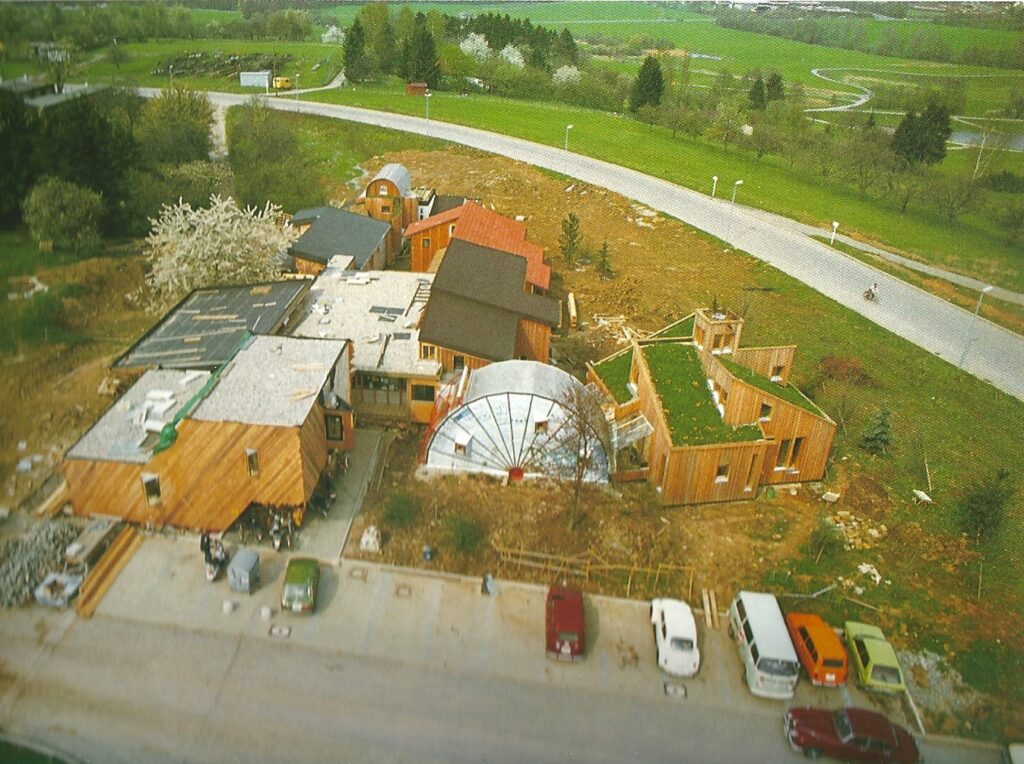
In the summer of 1981, the students had to put up with curious stares and the occasional snide remark. “What on earth are you hammering together? A chicken coop?” asked a passing retiree, posing a question that wasn’t entirely without merit to the hard-working architecture students. Taking it as a matter of personal pride, the father of this curious project stepped in to defend his protégés: “…these are the latest research findings in dormitory construction – after battery cages and floor rearing, now finally free-range housing for students and not just for chickens,” Peter Hübner grinned at the puzzled faces of the passersby.
Theory and Practice
Learning by Building It Yourself!
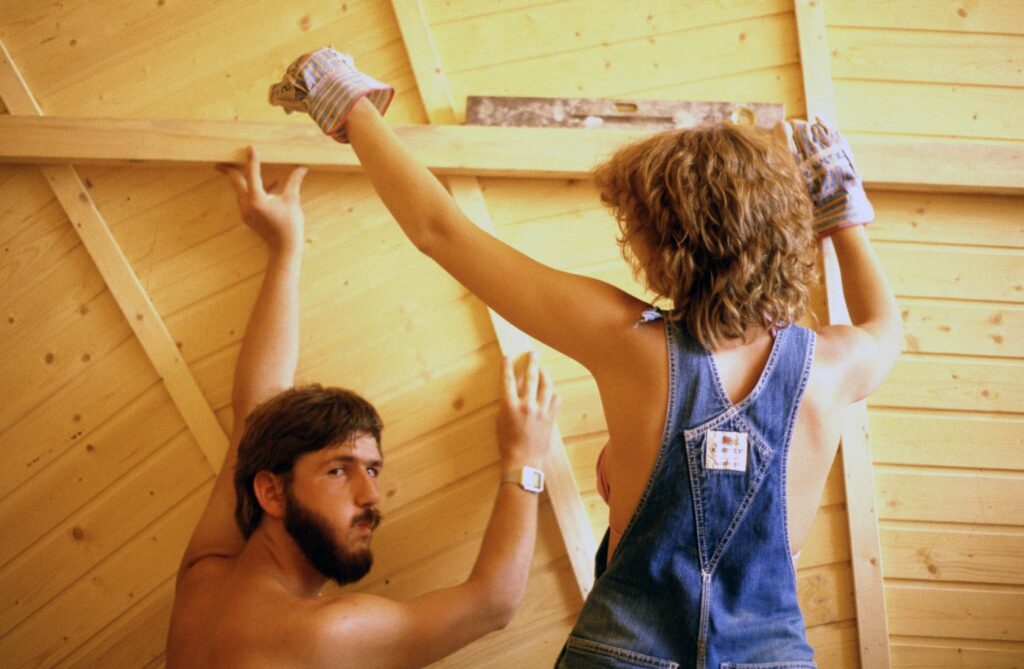
Together with his colleague Professor Peter Sulzer, the teaching assistants, and the adjunct professors at the Institute for Building Construction and Design, department 1, at the University of Stuttgart, he came up with the idea in 1980 for a new, contemporary, practice-oriented project as part of the architecture curriculum. Under the motto “Learning by Building It Yourself,” the young students were to combine theoretical work at the drawing board with practical work using a hammer, saw, and nails. The idea was to make building and construction tangible by having the students plan, design, and ultimately build and live in their own dormitory as a hands-on experiment. At first, the idea was dismissed as too complex and too ambitious, but despite all resistance, it was nevertheless put into practice.
Theory and Practice
Organization and Planning.
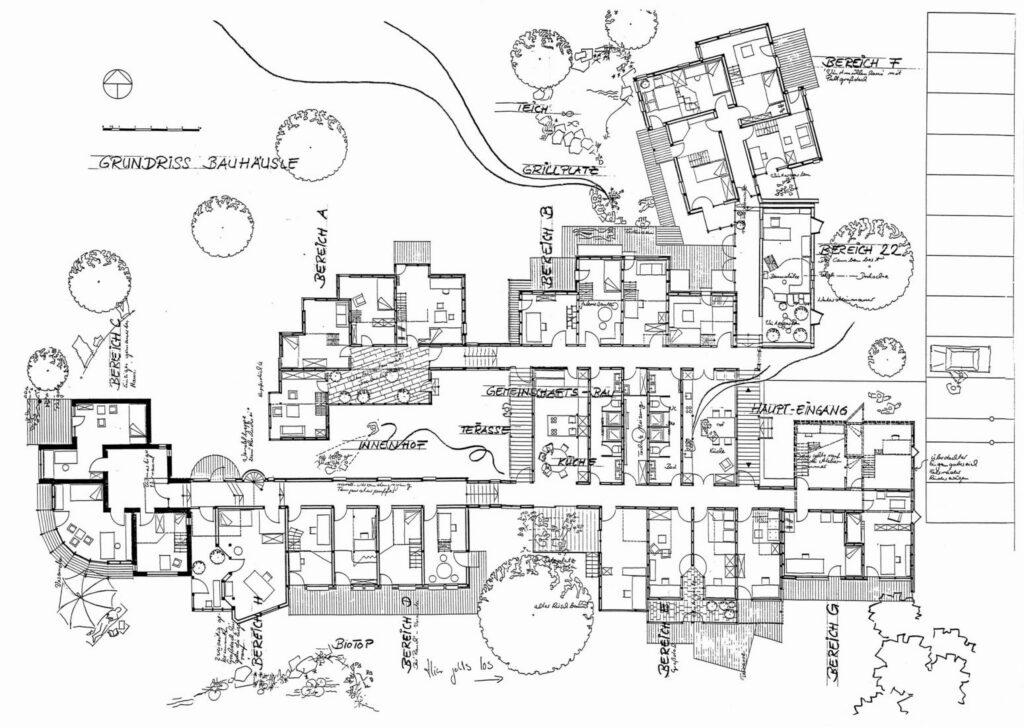
Overcoming the initial organizational hurdles was actively supported by various parties and successfully managed. Donations of materials and funds, a government grant, and the volunteer labor of approximately 200 students provided a solid financial foundation for the project. The Student Services Office at the University of Stuttgart agreed to take over the maintenance of the dormitory. Now that the organizational issues had been resolved, the Institute for Building Construction and Design could begin planning the “basic structure.” The communal building, featuring a kitchen, restrooms, showers, a lounge, and a utility room, was planned by the experienced “professionals” at the department before the incoming freshmen got down to business. During a one-year, intensive teaching and planning phase, the students worked in 30 small groups to develop a design for one room each.
Theory and Practice
Improvisation as the Foundation of Success.
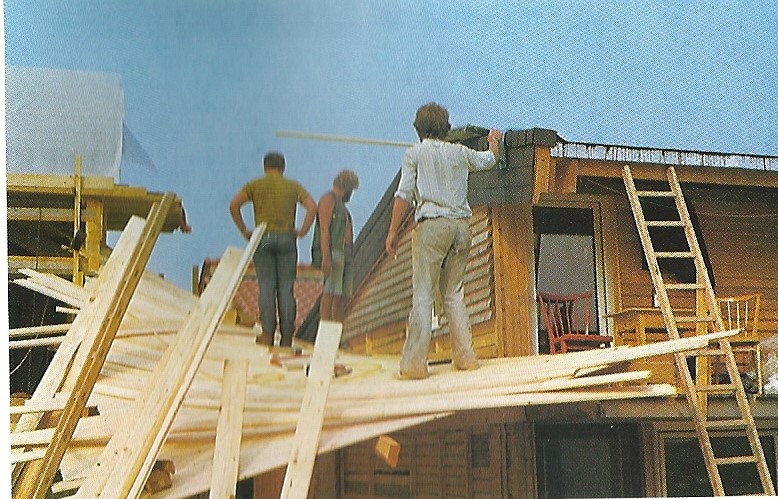
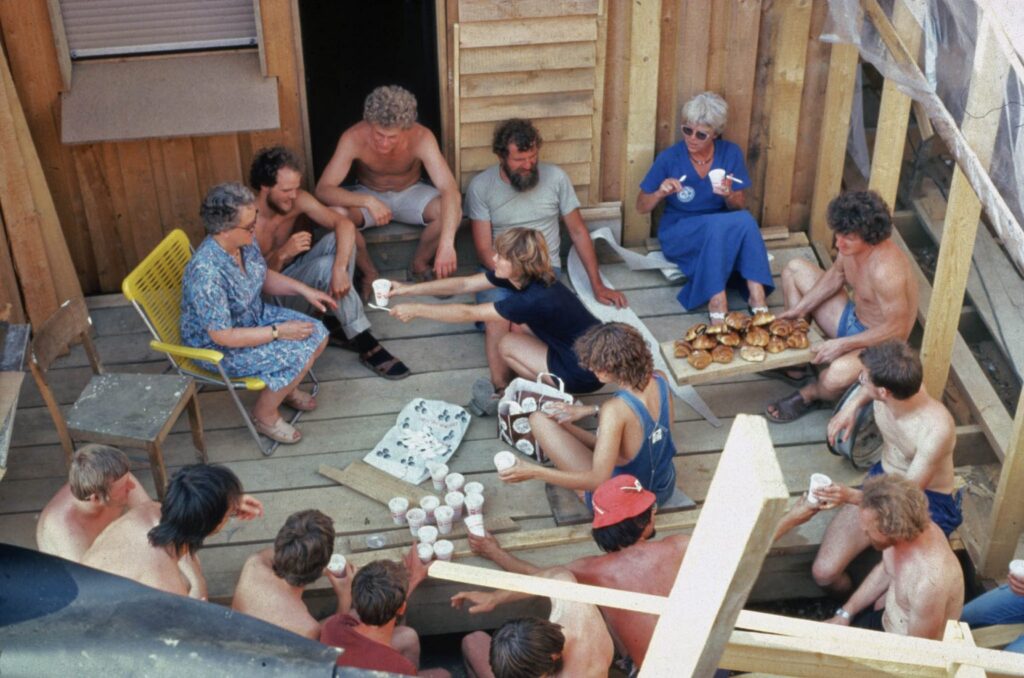
In the summer of 1981, the time had finally come; the symbolic groundbreaking ceremony was held. And it took less than two weeks for the students to gain their first experience with the “theory vs. practice” dilemma. What had looked quite simple and straightforward on the plans turned out to be a real problem in some situations on site. Now was the time to put improvisation skills to the test! But the whole thing worked the other way around, too. Problems that had caused some students sleepless nights while working at the drawing board sometimes resolved themselves on-site as if by magic. A factor that no architect can factor in from behind a desk also came to light early in the construction phase: the weather. Rain, cold, or scorching heat are mood killers for any worker. But here, too, those involved found ways to cope with the occasional spontaneous celebration. Or they enjoyed unexpected visitors who brought new motivation in the form of coffee and cake.
Theory and Practice
“It holds up, it stands…”
After just six months of construction, the first rooms were ready for occupancy. And following three additional construction phases, each carried out during the summer break, the new dormitory, with its 30 rooms, was handed over to the Student Services Organization in June 1982. In an ironic nod to the Weimar Bauhaus of the 1920s, the students christened their dorm the Bauhäusle. After two years of construction, without a crane or hoist, the students now stood before the dorm they had planned and built themselves. The dorm, consisting of several buildings, reflected the influences and ideas of nearly 200 minds. Everything is self-built: a “house of houses” consisting of several individual structures that do not stand in isolation but are connected by various passageways, corridors, and common rooms. “It holds up, it stands, it is technically perfect and terribly cozy; it has a bit of a Swabian and Black Forest feel to it…,” was the apt assessment of the Zurich Tages-Anzeiger.
Theory and Practice
Built, grown, and brought to life through close community.
A dormitory that has grown in a plant-like manner embodies architecture here not as a showy facade, but as a naturally grown, organic shell for a learning process that was only partly a construction process.
“Teachers and students formed a close-knit community in which roles were sometimes reversed,” says Peter Hübner. Thus, from the very beginning, the focus was not only on discussions about architectural forms, but first and foremost on a close-knit community of young people among whom there is a palpable harmony in both their individual and communal lives, then as now.
You want to know more?
You can find articles and videos all about the construction of the Bauhäusle on our publicity page.